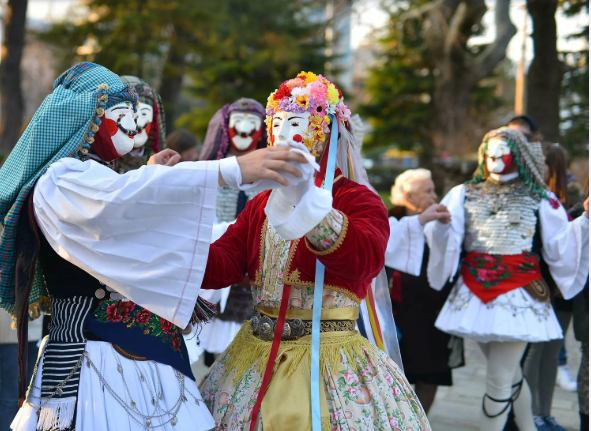
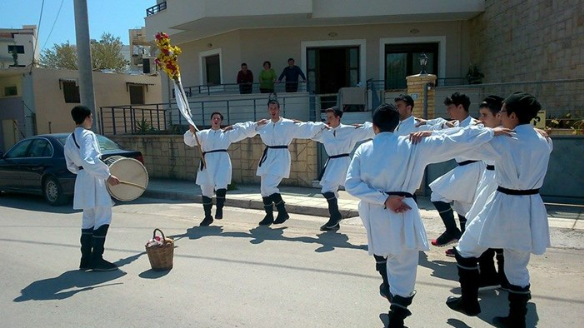

On Easter Monday, the custom of Rousalia is revived in Megara, with groups of boys singing and dancing from house to house. The custom has roots in antiquity, originally connected with the celebration of Rodismos and the worship of Spring, while later it was adapted to Christianity. In Megara, the “Rousalidia” would collect money and tips for charitable purposes. Dancing with traditional steps and singing, the children embody the local musical and cultural heritage, connecting the Resurrection of Christ with the community.
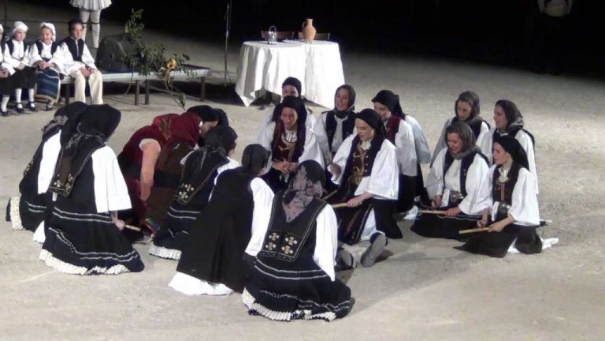
Every Tuesday after Easter, the custom of the Tratta dance is revived in Megara, dating back to the period of Ottoman rule. The dance, performed with hands crossed and linked together, was established when the people of Megara built the church of Ai Giannis in a single day. This dance imitates the way fishermen pull their nets and was named the “Tratta dance.” It is performed by women dressed in traditional costumes and accompanied by songs referring to the area and its religious traditions. The dance has deep roots in ancient tradition.