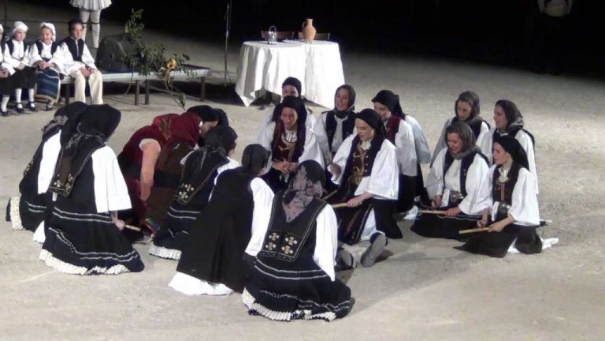
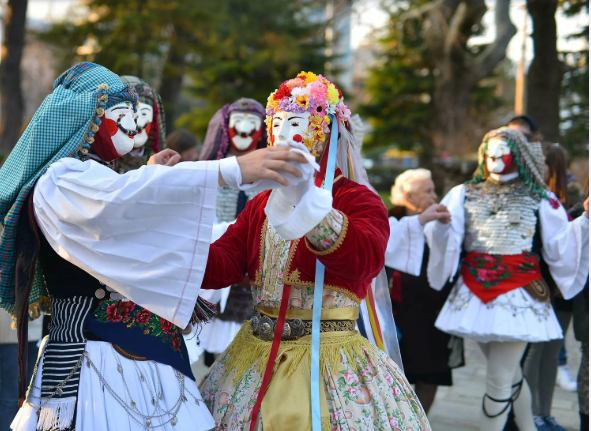
The custom of Genitsaroi and Boules is an important tradition of Naousa that is revived every Carnival season. It dates back to the 18th century and has its roots in ancient Greek celebrations in honor of the god Dionysus. The event includes male dancers dressed in traditional costumes, wearing the fustanella and known as Genitsaroi. Among them, there is also one dancer dressed in female attire, known as the Boula. There is also the view that all the dancers are Boules and that the female figure represents the Bride.
During Carnival, the Genitsaroi and Boules dance through the streets of Naousa, accompanied by the zourna and the daouli. The day begins with the dressing of the dancers and their gathering at the town hall, where they receive permission from the mayor to dance in the city. In the afternoon, they remove their masks in a symbolic gesture. The custom is an integral part of the carnival tradition and is full of historical and cultural references to local and national heritage.