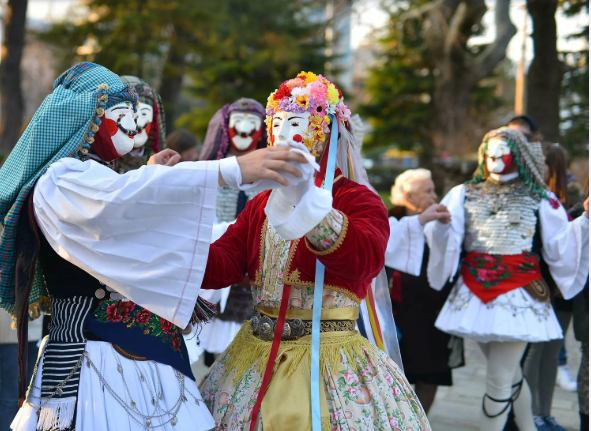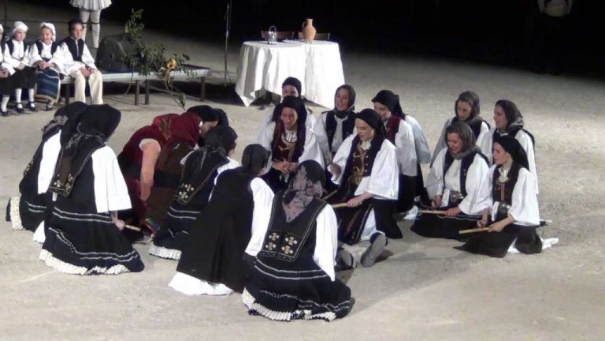
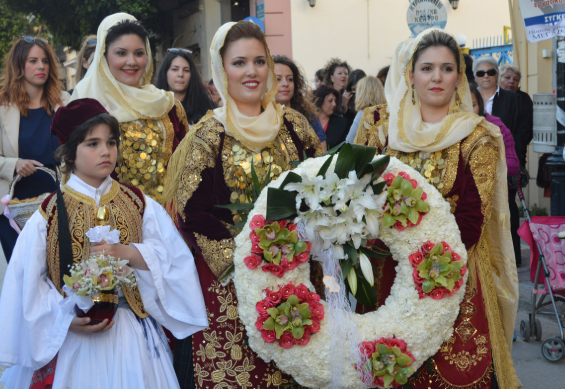
On the eve of May Day in Megara, an old custom with deep roots comes to life. Engaged young women visit their future mother-in-law, offering three symbolic gifts: a large wreath decorated with violets, carnations, and roses, a well-kneaded bread ring, and a jug of wine. The girls wear the traditional costume of Megara, known as “katifenia,” and are accompanied by two or three friends dressed in a similar way. One of them carries a decorated basket, covered with a kerchief known in Megara as a “kalamata.” Inside is the bread ring, decorated with xomplia — designs made of flowers and partridges — and always with a red egg at its center.
A young boy walks ahead, carrying the wine for the future father-in-law. He must have both of his parents still alive. When they arrive at the house, the future mother-in-law places the wreath on the wall and often varnishes the bread ring before placing it beside it. The basket is then filled with sweets, eggs, cookies, fabrics, or even a cake. The future father-in-law places money inside, as do the groom’s relatives, honoring the tradition. The custom of katifenia is a celebration of spring, joy, and female honor in Megara.